
Protect Your Skin, Protect Your Health | UV Safety Awareness Month
July 8, 2026
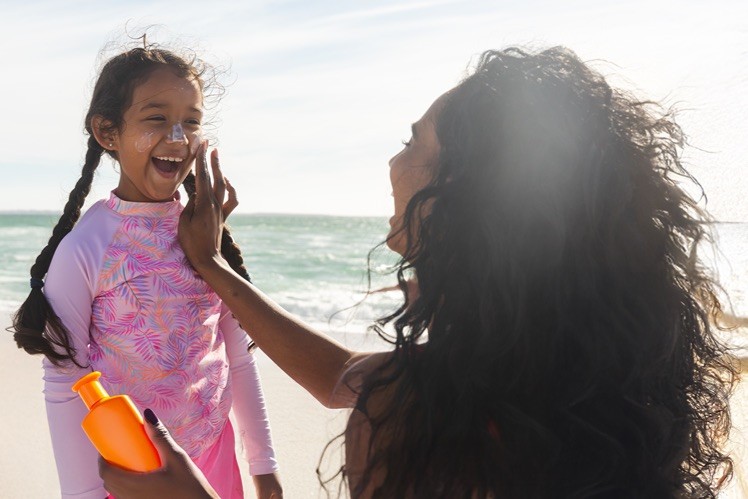
July is UV Safety Awareness Month, and for the people of Guam, sun safety is not just a seasonal concern. Hagåtña's UV Index peaks at 14 during midday hours, well into the "Extreme" category, where unprotected skin can burn in as little as 10 minutes. Unlike temperate destinations where UV risk varies by season, Guam's tropical latitude means this level of dangerous radiation is a year-round reality. Whether you're heading to the beach, commuting, or working outdoors, protecting your skin here is not optional, it's essential.
The Statistics Are Alarming
- Each year, more new skin cancer cases are diagnosed in the U.S. than breast, prostate, lung, and colon cancer cases combined.
- One in five Americans will develop skin cancer in their lifetime, and one American dies from it every hour.
- Melanoma makes up only 3% of skin cancer cases, but accounts for more than 75% of skin cancer deaths.
- Up to 90% of visible skin changes commonly attributed to aging are caused by sun exposure.
How to Protect Yourself
When the UV Index reaches 3 or higher:
- Seek shade, especially between 10 a.m. and 4 p.m.
- Wear clothing that covers your arms and legs
- Wear a wide-brimmed hat to shade your face, ears, and neck
- Use wraparound sunglasses that block both UVA and UVB rays
- Apply about one ounce of broad-spectrum sunscreen (SPF 15+) 15 minutes before going outside, and reapply every two hours, even on cloudy days and after swimming or sweating.
Take Action — Your Coverage Can Help
According to the EPA, unprotected exposure to UV radiation is the most preventable risk factor for skin cancer, yet many people still skip the sunscreen. That is a risk we can help you reduce.
At StayWell Insurance, we are more than just your insurance provider, we are your partner in health. This UV Safety Awareness Month, we encourage you to schedule a skin cancer screening and make sun protection a daily habit. Your skin health is worth protecting.
- Centers for Disease Control and Prevention. (2025). Ultraviolet radiation. Radiation and Your Health. https://www.cdc.gov/radiation-health/features/uv-radiation.html
- U.S. Environmental Protection Agency. (2024). Ultraviolet (UV) radiation and sun exposure. https://www.epa.gov/radtown/ultraviolet-uv-radiation-and-sun-exposure
- Centers for Disease Control and Prevention. (2026). Sun safety facts. Skin Cancer. https://www.cdc.gov/skin-cancer/sun-safety/index.html
- Centers for Disease Control and Prevention. (2026). Reducing risk for skin cancer. Skin Cancer. https://www.cdc.gov/skin-cancer/prevention/index.html
- U.S. Environmental Protection Agency. (2026). Sun safety tips. https://www.epa.gov/sunsafety/sun-safety-tips
- U.S. Environmental Protection Agency. (2026). Health effects of UV radiation. https://www.epa.gov/sunsafety/health-effects-uv-radiation
- Nomad Season. (2025). Hagatna UV Index — hourly & monthly UV levels in Hagatna, Guam. https://nomadseason.com/uv-index/guam/hagatna/hagatna.html
- Island Seeker. (2026). Guam sun safety guide 2026 — UV Index, best beach hours & what to pack. https://islandseeker.co/guam-sun-safety